Madhya Pradesh
Capital : Bhopal
Districts :48
Language: Hindi
Introduction to Madhya Pradesh
Madhya Pradesh is a cluster of innumerable districts and varied topographic and
climatic characteristics. Housing the magnificent Vindhyachal mountain range,
river valleys and plateau Madhya Pradesh is famous for its wonderful art,
craft, music and dance. Rich in geographical varieties, the state also has a
good number of important mines that has a good influence on the economy of the
country. Engaged mostly in agricultural activities, the state is the homeland
of many tribal races.
Geography of Madhya Pradesh
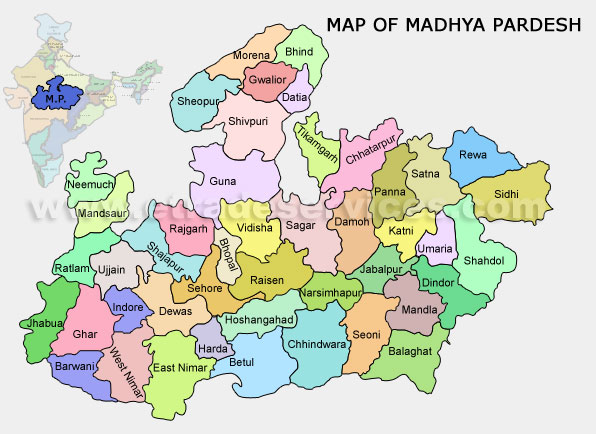
Madhya Pradesh lies in the middle of the India, sharing its border with six
neighboring states.
The northern border of the state has two neighbor states namely the state of Rajasthan and Uttar Pradesh. The western border of the state is shared by a part of Rajasthan and a part of Maharashtra with Gujarat in between. On the southern part of the state of Madhya Pradesh lie the states Maharashtra and Andhra Pradesh. The entire eastern border of the state is bounded by the states of Chattisgarh and Jharkhand.
The total geographical area the state of Madhya Pradesh covers is approximately 308,000 sq km divided among the 45 districts of the state. Forests cover a major part of the state and the cultivated area accounts to almost half of the total landmass of the state. The state covers a wide area of the Indian plateau region.
A number of significant rivers flow through this land. Thus, with the mountain ranges, rivers along with the plains, Madhya Pradesh has a varied physical feature.
Brief History of Madhya Pradesh
Historical record reveals the fact of it being ruled by a number of famous
empires of India. The empires included the Mauryan Empire to the Mughals and
later off course by the British. During the rule of the Mughals, famous
musician Tansen of Madhya Pradesh used to be the official singer of the Mughal
Samrat Akbar's court. There are many interesting legends and folklore related
to Tansen and Birbal in the court of Akbar.
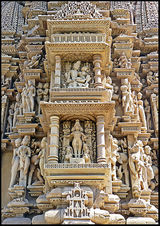
Madhya Pradesh is also the homeland of Kalidasa, the famous immortal Indian poet and dramatist. The innumerable monuments, carved temples, stupas, forts and palaces on hilltops signify the aesthetic sense of the empires and kingdoms, of great warriors and builders, poets and musicians, saints and philosophers.
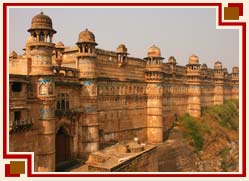
In the earlier times influence of religions like Hinduism, Buddhism, Jainism and Islam are still evident in the historical places here. Dynasties like that of Sungas, Andhras, Satavahanas, Ksaptrapas, Nagas and last but not the least the Guptas ruled over this place. During and after the tenth century different regions of the state were ruled by different dynasties like Chandellas, who ruled in Khajuraho, Muslims in Gwalior and the Holkar in Indore etc.
After the British took over the state, the state had been declared as the central province. After India gained her independence, under the provision of the state reorganization act of 1956, Madhya Pradesh was given the status of a full-fledged state with effect from 1st November 1956.
Chattisgarh has been carved out as a new state in November 2000 to fulfill a demand that was long due.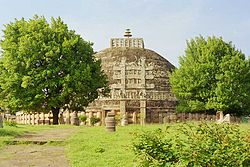
Rivers of Madhya Pradesh
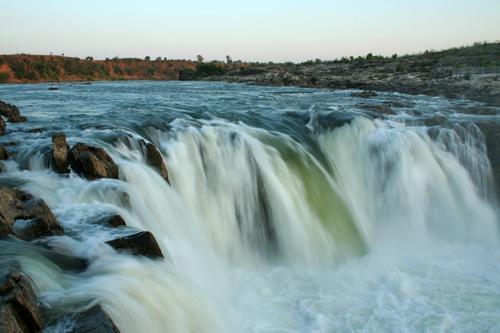
Madhya Pradesh represents great river basins and the watershed of a number of
rivers. Catchments of many rivers of India are lying in Madhya Pradesh. The
Narmada and Tapti rivers and their basins divide the state in two, with the
northern part draining largely into the Ganga basin and the southern part into
the Godavari and Mahanadi systems. The Chambal, Sone, Betwa, Mahanadi and
Indravati rivers flow from the western side of the state to the east, while
Narmada and Tapti flows from the eastern side to the west.
Education in Madhya Pradesh
The state of Madhya Pradesh has a well managed education system in the country.
Schools in the state are either affiliated to the state board of secondary
education or to the CBSE or ICSE. The schools run by the state government use
Hindi as their medium of instruction; however schools affiliated to CBSE or
ICSE use English as their medium of study.
The government has adopted the free and compulsory education policy to provide primary education to all children up to the age of 14. The state follows a uniform structure of school education i.e. the 10+2 system that is also adopted by other states and union territories of India.
Madhya Pradesh has 13 state universities, 3 deemed universities, 8 medical colleges and a good many number of engineering and management institutions. The state’s literacy rate figures 64.11% according to 2001 census report. The government is taking all possible steps to revamp the education system of the state.
Various projects are also running by NGOs to overcome the problem of illiteracy in remote villages. The state is getting tremendous success in this regard in the recent period.
Madhya Pradesh Food is characteristic of typical north Indian cuisine. Roti is
the staple food of the state. The vegetables are cooked with tomato and onion
as the major ingredients. Generally spicy and rich, both vegetarian and
non-vegetarian food are cooked.
Arts & Culture Madhya Pradesh
Madhya Pradesh is home to majority of India's tribal population who, in most
cases, live apart from mainstream India. The Gonds tribe is found in the
jungles south of Jabalpur. On the west lives the Bhils, while the Oraons
inhabit the eastern part of the state. The Bhils get their name from a
Dravidian word for bow, which is the hallmark of the tribe.
Despite the encroaching influence of
20th century urban life, the tribals have largely managed to retain their own
way of life, relatively untouched by modernization. However, besides the
original tribes of the region, a number of other people belonged to different
ethnicity has settled in the major centers of the state for varied reason.
The art and craft of the state is unique from region to region. A long heritage
of tradition continues to add a highly distinctive, individualistic touch to
the crafts of Madhya Pradesh.
The state is famous for its hand printing, generally with vegetable dyes. The major hand printing centers of the state includes, Jawad, Bhairongarh, Mandsaur, Umedpura, Burhanpur, Bhopal Indore, Gotampura, Sohawal, Tarapur and many more. Garments, bedspreads, tablecloths and curtain material are produced at Umedpura and Tarapur in Nandana prints that were once in vogue amongst the villagers of the legendary Nimar plain. From Bhairongarh come printed quilt covers in attractive colors and designs, lungies, odhanis, jajams (floor coverings), bedspreads and tablecloths. Tie and dye chunris are the specialty of Tarapur and Mandsaur. Textile weaving in Madhya Pradesh is as refined as the hand printing craft. Soft, subtle shades in delicate weaves come off the looms in Chanderi, near Gwalior.
The famous Chanderi sarees some of them with gold checks and rich gold border along with two gold bands on the pallav, give each saree a special touch. The craftsmanship of the famous Maheshwari sarees has a wide variety of checks. Madhya Pradesh is also famous at producing tussar silk handloom fabrics. Skilled craftsmanship of Madhya Pradesh also displayed in a variety of zari embroidered (gold and silver threads) articles.
There are zari wall hangings,
handbags, sarees and splendid brocade borders. Carpet weaving center of
Gwalior, in Madhya Pradesh is regarded as Mecca of crafts.
Madhya Pradesh is not only the geographical center stage of India it also
occupies a similar position in India's traditional heritage of music. Genius
like Tansen who perfected the dhrupad style of singing was born here. Moreover,
the Gwalior Gharana of Madhya Pradesh is a famous name in the world of Indian
classical music today.
Festivals of Madhya Pradesh