Kerala State Information
Capital :Thiruvananthapuram
Districts :14
Official language: Malayalam
Introduction to Kerala
Kerala is sandwiched between the Lakshadweep Sea and the Western Ghats, is a
narrow, fertile strip of land on the southwest coast of India. The landscape of
Kerala is a gift of the sea and the mountains. Overwhelmed by Kerala's scenic
splendor, a tourist once exclaimed, "The God that made Kerala had green
thumbs!" It is in this tranquil land of Kerala, embellished with green
that one can find an ideal getaway - an escape unwinding miles of find golden sands
with the boundless blue of the Arabian Sea. No doubt then that Kerala with its
beautiful landscape, intriguing customs, high-intensity cultural life and an
educated public so often dressed in white has highlighted its name on the
itinerary of many tourists in various parts of the world.

Kerala is located between latitudes 8 degree 18' north and 12 degree 48' north
and longitudes 74 degree east 52' and 72 degree 22' east, this is a land of
eternal beauty having 1.18 per cent of the country. It is on the tropical
Malabar Coast of southwestern India. Tamil Nadu state is in east and Karnataka
state is in north of Kerala. Due to its terrain and its physical features, it
is dividing in east west cross-section into three district regions - hill &
valleys midland plains and coastal region. Forests cover 27 per cent of the
whole of Kerala. Some of the forests are so dense that their flora and fauna,
in places such as Silent Valley, have not yet been completely assessed and
recorded. Medicinal herbs, abundant in these forests, are used in Ayurveda.
Brief History of Kerala
Kerala is mentioned in many ancient Sanskrit works. The Aitareya Aranyaka is
the earliest Sanskrit work, in which Kerala is mentioned. The Ramayana and
Mahabharatha, show indication of Kerala. Katyayana (4th century BC) and
Pathanjali (2nd Century BC) show their acquaintance to the Kerala. The puranas
also show the geography of Kerala. Kalidasa’s Raghuvamsa has given a beautiful
description of Kerala. Kautilya’s Arthasastra also mentions Kerala. In ancient
time, the population of Kerala was combination of different groups of
Dravidian. The ancient Dravidian kingdoms of South India (Chera, Chola and
Pandya) as well as their people were held together by intimate bonds of blood,
language and literature and that was the force, which promoted a sort of
cultural homogeneity in South India. The Aryan immigrants who settled in Kerala
had themselves to undergo radical changes in their ways of life, habits,
customs and manners. This process of transformation paved the way for a
desirable fusion of the two streams of culture; the Aryan and the Dravidian.
Aryan systems of medicine, astrology, art and architecture also were
introduced. The Vedas, Upanishads and Puranas became the scripture. their ways
of life, habits, customs and manners. This process of transformation paved the
way for a desirable fusion of the two streams of culture; this synthesis
evolved Kerala culture as it is today. Kerala has a culture with certain
distinct characteristics. Hinduism, Buddhism, Islam and Christianity have
contributed their significant share in enriching the cultural wealth of Kerala.
The States Reorganisation Act of November 1, 1956 elevated Kerala to statehood.
Kerala Travel Information
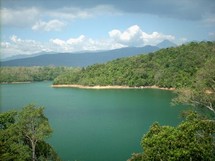
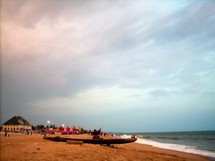
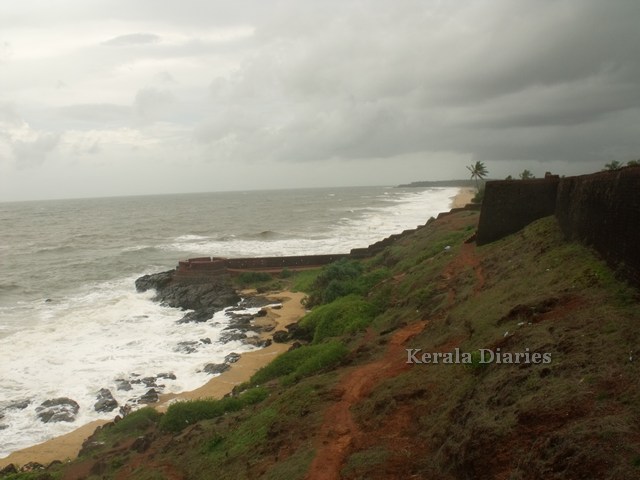
Kerala is one of the most romantic, beautiful natural attractions of the world.
It can attract a traveler with vast expanse of beaches, green shades of palm
trees, lowlands, and sky scraping mountains, placid lakes and some of the most
picture- perfect locations of the world. The distinctive features of Kerala are
ayurveda, backwaters, beach tourism and short distances. The natural beauty
packed with beaches, jungles, mountains and backwaters, Kerala is a hot
destination for health tourism. With age-old resources of Ayurveda, the
visitors can rejuvenate their body, mind and soul.
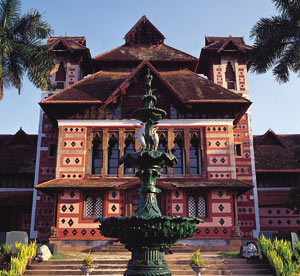
Thiruvananthapuram, the state capital has many tourist attractions such as Sri
Padmanabhaswamy temple, Puthe Maliga Palace Museum, Velli Turist Park, CVN
Kalari Sangam, Natural History Museum, Zoological Garden and Science and
Technology Museum. Ponmudi, a small hill resort is just 61 Kms from
Thiruvananthapuram and on the way, one can see Neyyar dam and Neyyar Wildlife
Sanctury. Kovalam, a picture perfect tiny beach is a certain charm and popular
with travelers looking for rest from their hectic life. The places worth
visiting in and near Kovalam are Vizhinjam, Pulinkudi & Chwara, Samudra
Beach and Pozhikkara beach and Varkala Beach resort. The other places to visit
in Kerala are Kollam, Alappuzha, Kottayam, Ettumanur, Munnar, Kochi, Thrissur,
Kozhikode, mahe, Thalasseri and Bekal.
Rivers of Kerala
Kerala has 44 rivers, of which 41 originate from the Western Ghats and flow
towards west into the Arabian Sea. The river Cauvery originate in Kerala and
flow east into the neighboring States. These rivers and streams flowing down
from the Western Ghats either empty themselves in to the backwaters in the
coastal area or directly into the Arabian Sea. The important rivers from north
to south are Valapattanam (110 kms.), Chaliar (69 kms.), Kadalundipuzha (130
kms.), Bharathapuzha (209 kms.), Chalakudy (130 kms.), Periyar (244 kms), Pamba
(176 kms), Achancoil (128 kms.) and Kalladayar (121 kms.). Other than these,
there are 35 more small rivers and rivulets flowing down from the Ghats. Most
of these rivers are navigable up to the midland region for country crafts,
which provide a cheap and reliable transport system. The presence of a large
number of rivers has made Kerala rich in water resources, which are being
harnessed for power generation and irrigation
Education in Kerala
Kerala is best in India in literacy and education. According to the census of
2001, the rate of literacy in Kerala is highest with an average of 90.92 per
cent. It signifies that Kerala is at par with advanced countries of the world
on point of literacy. The Muslims had their Madrassas and Arabic Colleges. The
Madrassas give special emphasis on the learning of Quran, the life of the
prophet, worship and the tenets of Islam. The beginning of Western education in
Kerala may be associated with the work of Christian missionaries. The
foundations of English education were firmly laid in Kerala. This led to the
establishment of institutions offering professional and technical courses as
well as those devoted to the promotion of oriental studies and fine arts.
Institutions like Law College, Thiruvananthapuram (1874), the Ayurveda College,
Thiruvanthapuram (1889), the Sanskrit College, Thiruvananthapuram (1889), the
Engineering College, Thiruvanthapuram (1939), the Swathi Thirunal Academy, (now
College of Music) (1939), the Medical College, Thiruvananthapuram (1951), the
Agricultural College, Thiruvanthapuram, (1955), and the Veterinary College,
Trichur (1955) were started. In 1937, the University of Travancore with
headquarters in Trivandrum was set up. In 1957 following the birth of Kerala
State, the Travancore University was recognised as Kerala University with
jurisdiction over the whole of the state until 1968 when the new University of
Calicut was established to cater the needs of North Kerala. The Cochin
University of Science and Technology, the Kerala Agricultural University,
Trissur, The Mahatma Gandhi University, Kottayam, the Sree Sankaracharya
Sanskrit University, Kaladi, the North Malabar University Kannur were
established later
Food of Kerala
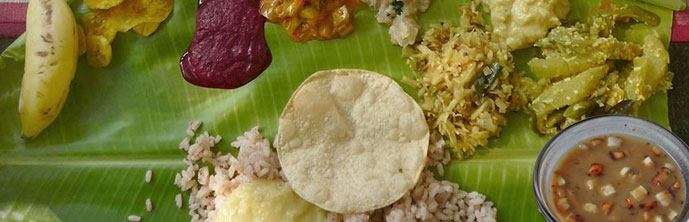
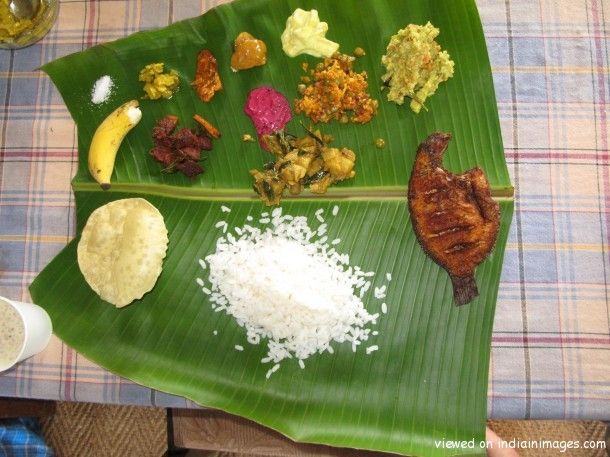
Food in Kerala is light, fresh and easy to eat. The main food items are rice, coconut and vegetables, apart from fish. Food is traditionally eaten by the hand and served on a banana leaf. Another interesting feature is the abundant use of coconut oil, chilli, mustard seeds, curry leaves, and coconut milk.
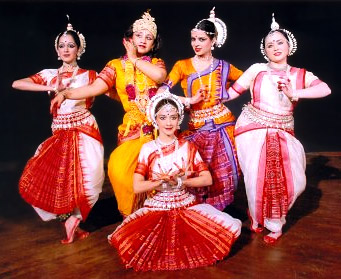
Kerala is very rich in cultural heritage developed through the centuries and typical art forms, particularly folk dances. Kerala's culture is mainly Dravidian in origin, deriving from a greater Tamil-heritage region known as Tamilakam. Later, Kerala's culture was elaborated on through centuries of contact with overseas cultures.v
Kerala is very rich in cultural heritage developed through the centuries and typical art forms, particularly folk dances. Kerala's culture is mainly Dravidian in origin, deriving from a greater Tamil-heritage region known as Tamilakam. Later, Kerala's culture was elaborated on through centuries of contact with overseas cultures.
The festivals of kerala
Nature’s bounty is not the only reason why Kerala is God's Own Country. It is also landof festivals, replete with colours and sounds and spectacular sights. Festivals had been interwoven with the culture and tradition of the land from time immemorial.
Foremost among them is Onam, the famous harvest festival with Mahabali, the mythological king of Kerala as a reason for celebrating the festival. His rule was supposed to be a period which has prosperity and peace as its hallmarks. Every year, the land decks up in anticipation of the visit of its beloved king, who was sent to the nether world by one of Lord Vishnu’s incarnations – Vamana. Kerala celebrates Onam with great pride and joy, and each corner of the state echoes with the joyous sounds of native sports, art forms, processions and fairs and the inevitable floral decoration. Many temple festivals, boat races and agrarian event are also held during the Onam season.
In Kerala, many festivals are celeberated as part of temple rituals. Patayani is one such ritual celebrated in some of the temples dedicated Goddess Bhagavathi in Central Travancore. The month of December witnesses the arrival of the majestic Theyyams in North Kerala. Also known as Kaliyattam, Theyyam is an intricate blend of dance, mime and music, enshrining rudiments of the ancient tribal practice of worshipping heroes and ancestral spirits.
From February to mid-May is the season of Poorams and Velas, the temple festivals of northern Kerala. Among these, the Thrissur Pooram is a grand affair with the Vadakkumnatha Temple in Thrissur taking the centre stage of the event. The festival days are marked by processions comprising of caparisoned elephants, traditional orchestras, rituals inside and outside the temple and dazzling fireworks. All these are witnessed and enjoyed by an enthusiastic crowd, which adds to the whole excitement.
Just like the Thrissur Pooram, there are scores of other festivals that paint the days with vibrant colours and the nights with haunting beauty. Festivals never end in this land. As the day follows the night and seasons come one after the other, so do the festivals of Kerala.
