JAMMU & KASHMIR
Jammu & Kashmir State Information
Capital : Summer(May-October)- Srinagar, Winters (November-April)- Jammu
Districts :14
languages: Urdu, Kashmiri, Hindi, Dogri, Pahari, Ladakhi,
Introduction to Jammu & Kashmir
Jammu & Kashmir is the jeweled crown of India with extravagant beauty of
Himalayas. RajTaringini, the chronology of the Kashmir Kings written by Kalhana
eulogises the beauty of Kashmir as "Kasmira Parvati Paroksh; Tat Swami ch
Maheswara". Meaning Kashmir is as beautiful as Goddess Parvati manifest
and its owner is Lord Shiva Himself. The Mughal Emperor exclaimed "Gar
Bar-ru-e-Zamin Ast; Hamin Ast, Hamin Ast Hamin Asto. Meaning if there is
paradise on this earth: This is it, this is it, this is it. Jammu and Kashmir
presents the distinction of multifaceted, variegated and unique cultural blend.

Geography of Jammu & Kashmir
Jammu & Kashmir is situated between 32.17 degree and 36.58 degree north
latitude and 37.26 degree and 80.30 degree east longitude. The total area of
the State is 222,236 sq. kms including 78,114 sq kms under the illegal
occupation of Pakistan and 42,685 sq kms under that of China. The State is
bounded by Pakistan, Afghanistan and China from the West to the East. The State
is well connected with rest of the country by air, rail and road . The Indian
Airlines and private airlines operate regular flights to Srinagar, Jammu and
Leh. The National Highway 1-A connects the capital cities of Srinagar and Jammu
with rest of the country.
Brief History of Jammu & Kashmir
Kashmir is mentioned in the epic Mahabharata. In 250 BC, Ashoka, the great
Mauryan king, established the city of Pandrethan and built many viharas and
chaityas. This says much about the strategic importance that this region held
even in that time. Some sources claim that Buddha also visited this region,
though no proof is available to validate this theory. Kanishka, the great
Kushana king, called the Third Buddhist Council at Harwan, near Srinagar, in
the first century AD. This Council saw the division of Buddhism in two distinct
streams called Hinayana and Mahayana. Kalhana, the first Indian history writer,
gave a vivid account of the history of Kashmir before the 10th century AD.
Local kingdoms ruled extensively in this region until the 12th century AD when
Muslims invaded the region. The greatest Muslim king of early medieval age in
Kashmir was Zain-ul-Abidin, who ascended the throne in AD 1420 and ruled up to
1470. His long rule contributed extensively to the spread of art, culture,
music, and every other sphere in the life of Kashmir people. He also created a
strong army and annexed many regions nearby Kashmir. These were the time of
golden rule in Kashmir when peace and harmony prevailed. After the death of
King Zain-ul-Abidin, a period of destruction came calling to Kashmir and many
raiders from outside looted the state and made the people and local rulers
their captive.
In 1587, Akbar annexed Kashmir into his vast empire. Jahangir, son of Akbar and
next Mughal ruler, visited Kashmir 13 times and created two beautiful gardens
on the bank of Dal Lake, namely, the Shalimar Bagh and Nishat Bagh. After two
centuries of peace and development, Kashmir came into the hands of the Pathans
in 1752, when the Afghan ruler Abdul Shah Abdali attacked this region on the
request of local noblemen. In 1819, the Sikhs under Maharaja Ranjit Singh
annexed this region, but their empire remained in place only for 27 years. From
1846 to 1957, the Dogras ruled over this region when British defeated Ranjit
Singh and handed over the administration of this region to Maharaja Gulab
Singh.
Jammu & Kashmir Travel Information
Srinagar is an ancient city and has many attractions that can attract even the
most unwilling of tourists to this magical land. Dal Lake, Nishat Bagh,
Shalimar Bagh, and Chashme Shahi are some of the best-known tourist spot in
Srinagar. Jammu is the winter capital of the state and next in importance after
Srinagar. Most of the tourists who come to the Jammu region have the Mata
Vaishno Devi shrine as their destination, which is quite close by. However, the
spirit of holiness permeates through the entire city, so much so that Jammu is
also known as the ‘City of Temples’. If Bahu Mata is the presiding deity of
Jammu, the dargah of Peer Budhan Ali Shah is the other shrine that is believed
to protect the local people. The other major tourist attraction is the
Raghunath Temple Complex, which is the largest temple in North India devoted to
Lord Rama. The construction of this temple was begun by Maharaja Gulab Singh in
1851 and completed by his son Ranbir Singh six years later. The temple of Maha
Kali (better known as Bahu or Bawey Wali Mata), located in the Bahu Fort, is
considered second only to Mata Vaishno Devi in terms of mystical power. The
temple was built shortly after the coronation of Maharaja Gulab Singh in 1822.
Other temples in the city include the Gauri Kund Temple, Shudh Mahadev Temple,
Shiva Temple, Peer Khoh Cave Temple, Ranbireshwar Temple, and the Parmandal
Temple Complex.
The most stunning site in Jammu is the Sheesh Mahal. The Pink Hall of the
palace now houses the Dogra Art Museum, which has miniature paintings of the
various hill schools. The museum also has the handwritten Persian manuscripts
of the Shahnama and Sikandernama. The palace was once the royal residence of
the Dogra kings. Built as a group of buildings around a courtyard, the palace
has a commanding view of river Tawi on one side and the city on the other. The
Amar Mahal Palace Museum is a beautiful palace of red sandstone, which stands
amidst the most picturesque environs of Jammu. It offers a beautiful view of
the Shivaliks in the north and the river Tawi in the south. This was once the
residential palace of Raja Amar Singh, but now it has been converted into a
museum. The museum has a golden throne made of 120 kg of pure gold. A treat for
those interested in history is the town of Akhnoor, 32 km southwest of Jammu.
Standing on the banks of the mighty river Chenab, the town tells the tragic
tale of the lovers Sohni and Mahiwal. Along the riverbank are the majestic
ruins of the Indus Valley Civilization that are of great historical importance.
Patnitop, near the Vaishno Devi Temple, is fast becoming a busy hill station
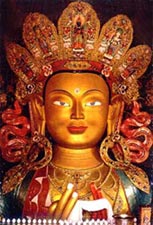
and a good place to enjoy the nature in its eternity. Ladakh is home to the
minority Buddhist community in the state. They have preserved their unique
culture for the past hundreds of years. Leh is the headquarters of this region.
The major points of attraction are the Leh Palace, Namgyal Tsemo Gompa, Sankar
Gompa, Shanti Stupa, and Soma Gompa.
Rivers of Jammu & Kashmir
Main Rivers in Jammu and Kashmir are Galquit River, Jhelum River, Shajsqem
River, Shikar(South) River, Zanskar river and Khurana River .
Education in Jammu & Kashmir
Jammu and Kashmir is the only state where education is free up to university
stage. Seasonal schools have been opened for people in the hilly areas and for
the scheduled castes. Yet the state is educationally backward. Against the
national literacy rate of 75.96% for males and 54.28% for females, the state
has a literacy figure of only 65.74% for males and 41.82% for females
respectively. On the technical education side, there are two regional
engineering colleges in the state. In addition, there are four polytechnics to
impart vocational training. District institutes of education have been opened in
all the districts
Food of Jammu & Kashmir
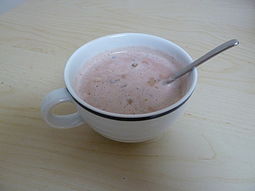
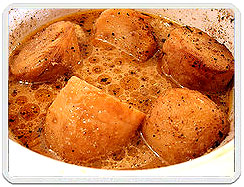
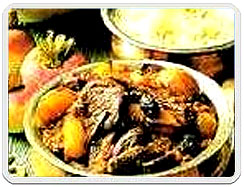
The Kashmiris are passionate about their food and known for spicy meat dishes and the delicate flavor of saffron. Meat being the staple, most of the special dishes have mutton as a major ingredient. Nahari, a special breakfast dish, is a stew of trotters and tongue, seasoned with cassia buds, cardamom, sandalwood powder, vetiver roots and dried rose petals. The sheermal bread goes well with this stew. The methi maz, on the other hand, is a superb blend of mild-tasting entrails and strong-flavored fenugreek leaves. Tracing its roots to Kashmir is the ever-popular rogan josh, which is spiced lamb cooked in yogurt and aniseed, a spice not very commonly used in other regional cuisines. While tabak maz is spiced ribs fried to crispiness, for the qorma, a lightly sour creamy dish, shoulder of lamb and tail are cooked in milk and dried apricots, and the yakhni uses curd as the base for its sauce. Rista, the first gravy dish to make its appearance in a wazwan, is a meatball of pounded lamb that is silky in texture. After a whole range of dishes comes the gushtaba, a giant meatball made of the same, pounded meat, cooked in a curd based gravy. A semolina pudding sometimes follows the main courses of the wazwan, but there are not too many sweet dishes in the Kashmiri repertoire. However, a different preparation, served to freshen the mouth after the wazwan, is the gota-a mixture of aniseed, sugar candy, bits of supari, coarsely grated coconut and kernels of muskmelon seeds.
Arts & Culture of Jammu &
Kashmir
Kashmiri lifestyle is essentially, irrespective of the differing religious
beliefs, slow paced. The culture has been rich enough to reflect the religious
diversity as tribes celebrate festivities that divert them from their otherwise
monotonous way of life.
While the Kashmir has been the highest learning center of Sanskrit and Persian where early Indo-Aryanic civilization has originated and flourished, it has also been embracing point of advent of Islam bringing its fold finest traditions of Persian civilization, tolerance, brotherhood and sacrifice. Ladakh on the other hand, has been the highest and living center of Tantrayan Buddhism. Jammu, the same way, has been the seat of Rajas and Maharajas, which have cemented and enriched the cultural, historical and social bonds of all these diverse ethnic and linguistic divisions of the state. The ancient archeological monuments and remnants speak volume of the district cultural traditions of the state.
Festivals of Jammu & Kashmir
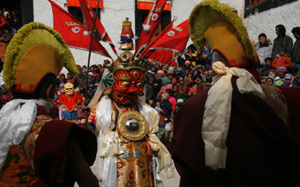
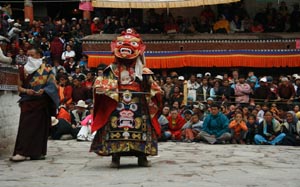
The Hemis Festival is held in the month of July when tourists in large numbers converge here from all over the world to watch the famous masked dances. The music is characteristically punctuated with sounds of cymbals, drums and long, unwieldy trumpets. The masked dancers move around slowly, very slowly, and the most vital part of the dance is the masks and not so much the actual movements of the dance. The dances end with Good vanquishing Evil and the evil one is brought into the protective fold of Buddhism.
Like the Hemis festival, monasteries like Lamayuru, Thiksey, Spitook, Likir and many others also have their individual festivals. Since they follow the lunar calendar, the actual dates of the festivals vary from one year to another. Other than these religious celebrations, Ladakh has also been host to a 15-day festival each year to bring forward the many nuances of this rich and exotic culture that is peculiar to this high part of the world. The Jammu and Kashmir tourism department organizes the Ladakh Festival in the month of September bringing forward the region’s folk dances, art and craft, sporting events and rituals.